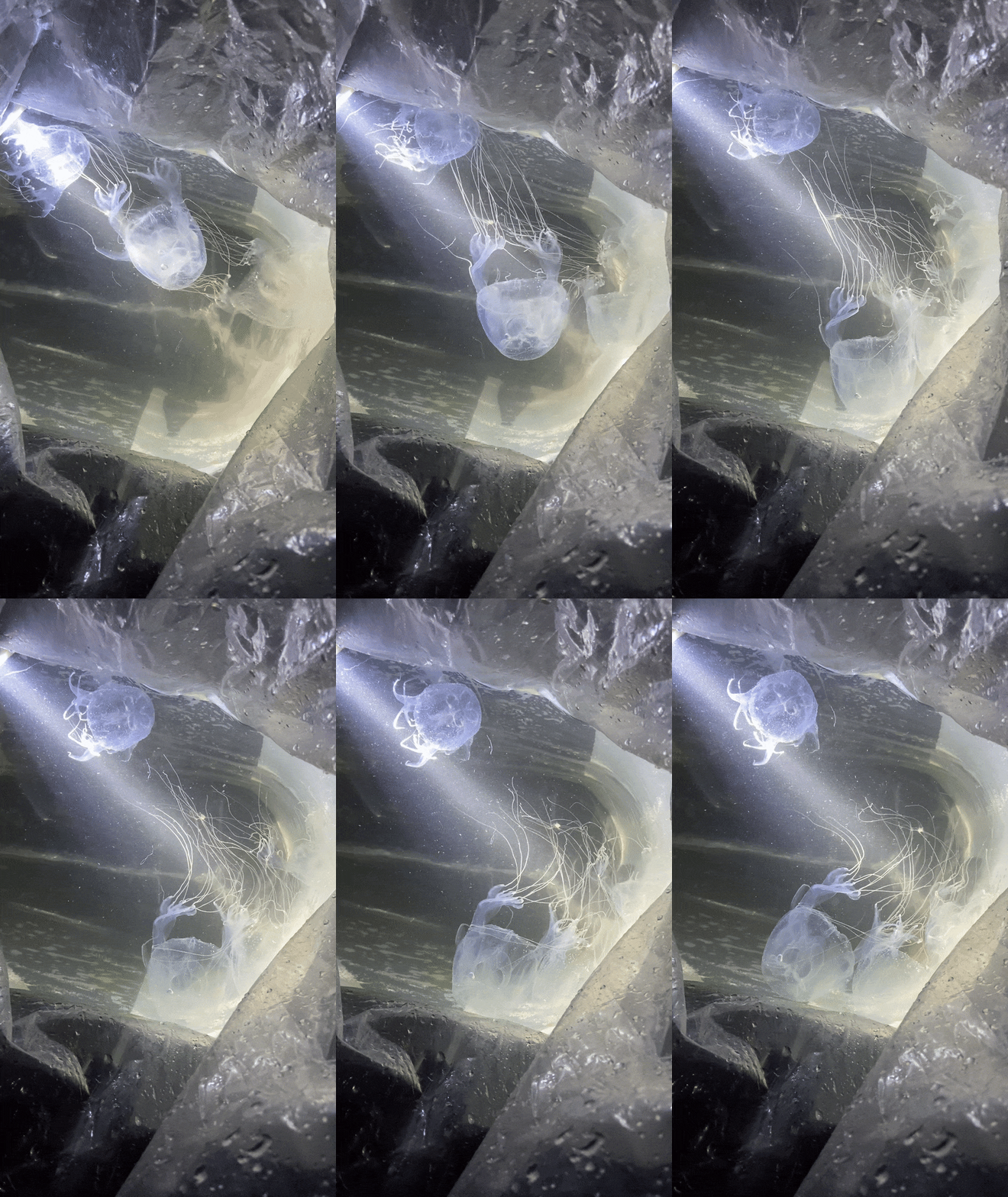
Four Handed Box Jelly
Chiropsalmus sp.
The Four Handed Box jelly is an enigmatic cubozoan found from Brazil through North Carolina. In America, they are frequently found in South Carolina and Georgia during summer months. Their sting is incredibly painful and potentially lethal. Despite this, they are largely under studied and their life cycle is essentially unknown.

Healthy specimens have rigid, cuboid bells dotted with nematocyst warts. Smooth, flimsy specimens indicate a distressed jelly that is rapidly deteriorating.

A nasty sting across the leg resulting from wading through the trailing tentacles of a Four Handed Box Jelly.
Caring for Four Handed Box Jellies
Four Handed Box Jellies are remarkably difficult to maintain or even transport. Specimens that are found washed up or in shoreline waters are often beat up and well past the point of recovery. Their bells form a characteristic rubber-banded look near the top that indicates a severely distressed animal. Although often found around inlets, I have hypothesized that these box jellies may typically live further off shore in clean and pristine water. Even seemingly healthy specimens rapidly decline when they reach intertidal water. Moving them back into clean ocean water does not seem to stop their deterioration. The best chance at keeping them would be to collect specimens directly from the ocean.
About their Stings: It is important to be aware that the venom of this species is largely understudied and caution should always be exercised when handling. Chiropsalmus has resulted in the death of at least one individual.