
Baja Blue Cannonball jellyfish
Stomolophus sp. 2
Up until just a few years ago, Blue Cannonball jellies were almost an urban legend. Few photos or accounts existed of these intensely blue and enigmatic jellyfish. Found in and around the waters of the Gulf of California, an area that is both geographically isolated and sometimes treacherous. This isolation allowed these jellies to remain largely unknown until they were recently cultured in captivity. These are currently awaiting a formal species description and are known as "sp. 2" in the meantime.

A blue cannonball that was raised under normal salinity instead of the hyposalinity method.
![Stomolophus sp.2 [2] WM.jpg](https://static.wixstatic.com/media/653e82_6aba266faea14375a1433973a951a202~mv2.jpg/v1/fill/w_327,h_327,al_c,q_80,usm_0.66_1.00_0.01,enc_avif,quality_auto/Stomolophus%20sp_2%20%5B2%5D%20WM.jpg)
A blue cannonball that was raised at 1.014 SG/20 ppt. Note how the oral arms are more correctly developed, the bell is rounder and thicker and overall, this jellyfish more closely resembles what a wild specimen would look like.
Caring for Blue Cannonball Jellyfish
Under the right conditions, this species grows very quickly. But with fast growth and a high metabolism come many drawbacks. To fuel that lifestyle, Blue Cannonball Jellies have to eat often. This can be accomplished by feeding them multiple times a day. Another helpful trick is to keep them at a lower salinity and temperature, slowing down that growth and metabolism to a more stable, manageable level. These jellies are surprisingly persistent, but keeping them happy and healthy is a very difficult task. I would rank them among the most difficult and labor intensive jellyfish I have kept to date.
Stocking density: Tanging is not an issue as cannonball jellies lack tentacles. They do greatly benefit from plenty of space, however. Raising them in dense quantities can cause them to not develop correctly and raising them in small spaces can cause bell deformation. An ideal setup would be up to 5 jellyfish in no less than 40 gallons of water. Their bells will deform in smaller aquariums, causing permanent damage.
Flow: Medium, Cannonball Jellies are among the strongest swimming jellyfish and do a pretty good job keeping themselves afloat. They do appreciate a fair amount of supplementary water flow. This should be enough for them to cruise through but not so much that it's pushing them around the aquarium.
Feeding: Live baby brine shrimp, rotifers, Reef Nutrition Oyster Feast. Cannonballs prefer to eat small amounts of food throughout the day, versus a few large meals. I recommend keeping some amount of food in the water at all times or their metabolic needs will not be met. This can be accomplished by feeding many times throughout the day or by setting up an automatic feeder with a peristaltic dosing pump.
Temperature Range: 68-74F- they can be kept closer to 77 F but they will be considerably more active and require frequent feedings.
Salinity: Keeping them at a brackish salinity also seems to help stabilize their growth. 1.014 SG or 20 ppt.
Cannonball Jelly Burnout - The Primary Challenge in Keeping Cannonballs
Cannonball jellyfish (and sometimes other closely related species) will exhibit what I call "Cannonball Jelly Burnout". They stop pulsing entirely and their bells will often curl, giving them a more balled appearance. They continue to eat and live, but almost never pulse and float aimlessly through the aquarium. This condition is sometimes reversible if caught early, but is typically terminal. My current belief is that this is caused by the jellyfish growing faster and requiring more energy than it is taking in by feeding. As mentioned above, raising them at hypo-salinity helps immensely. Perhaps the lower salinity slows down their metabolism, allowing their growth to be slower and more manageable. In addition to the hypo salinity, they also require constant feeding of high quality food items. Live brine shrimp alone are not enough. I like to prepare an emulsion by blending together a mix of frozen Mysis Shrimp, Oyster Feast and jellyfish pellets. I then feed this in small quantities, usually 2-3 mLs at a time (feeding too much can overwhelm the jellies and greatly impact water quality).
Life Stages


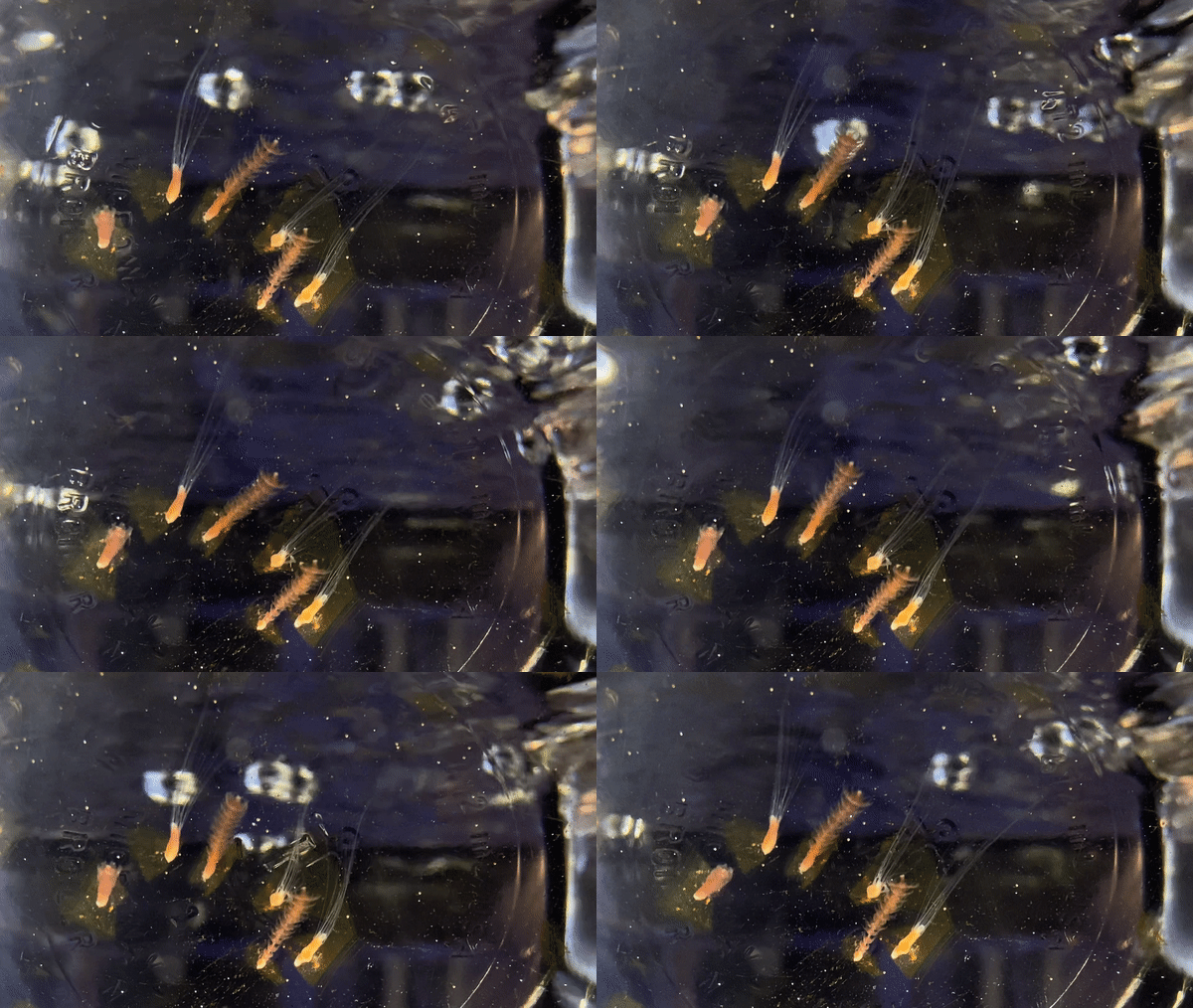
Polyps and Strobila with ephyra almost ready to be released.